
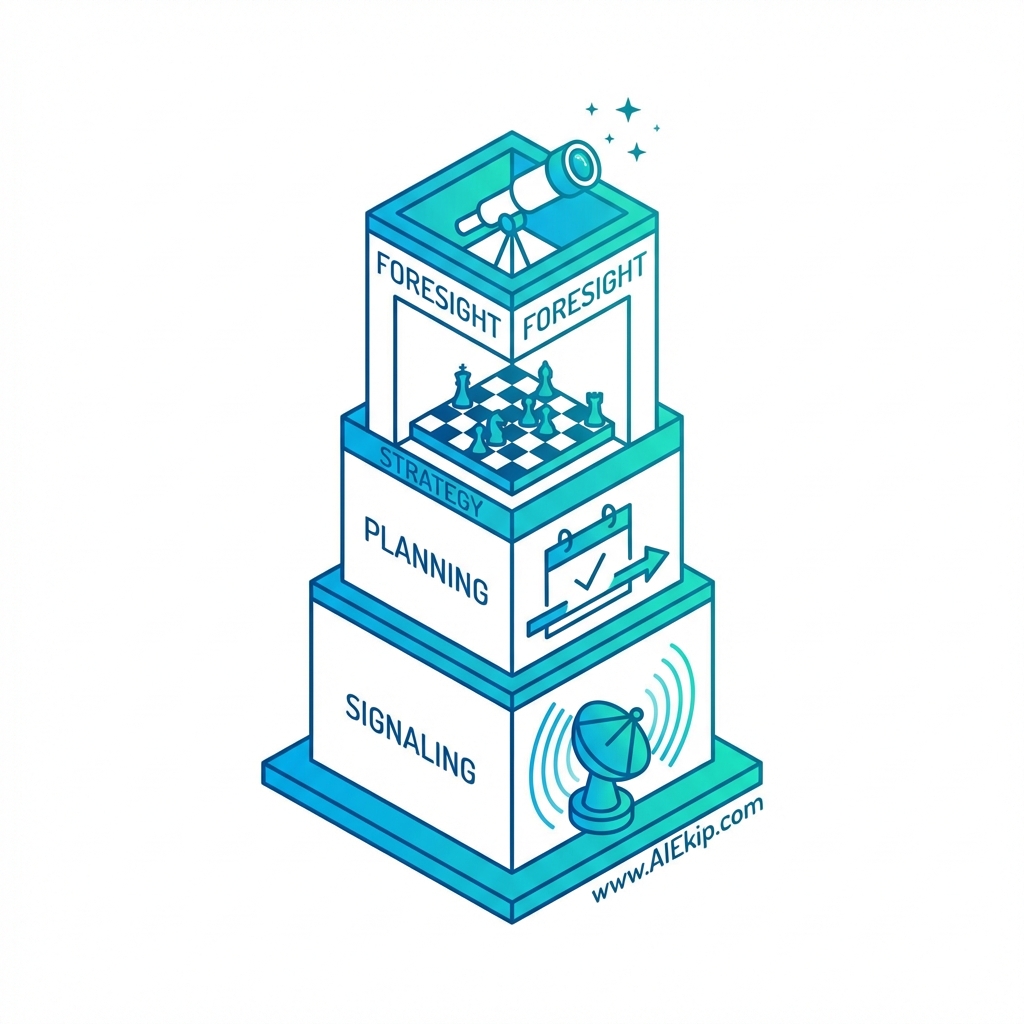
For decades, the term "Strategic Planning" has been used as a catch-all phrase in boardrooms around the world. However, treating these two concepts as a single entity is a common mistake that can lead to operational stagnation and market irrelevance. To achieve true market dominance, leaders must decouple these terms and understand the four distinct layers of business navigation: Foresight, Strategy, Planning, and Signaling.
What is Strategic Clarity?
Strategic clarity is the ability to distinguish between long-term vision and short-term execution. At aiekip.com, we see firsthand how businesses struggle when they try to "plan" their way into a new market without first developing a "strategy" to win. By leveraging advanced AI workflows, organizations can now gain deeper insights into each of these four pillars, ensuring that every move is backed by data and intentionality.
1. Foresight: The Long-Term Bet
Foresight is not about predicting the future; it is about identifying potential scenarios that could shift the entire market. This is where you place your "long-term bets." The goal of foresight is future market dominance.
- Focus: 5-10+ years out.
- Example: Investing in the development of next-generation quantum processors years before the market is ready.
- Why it matters: Without foresight, you are merely reacting to the world others are building.
2. Strategy: The Mid-Term Choices
Strategy involves the specific choices and priorities you set to win in your chosen market. It is about protecting your relevance and ensuring value creation. Strategy is as much about what you will not do as it is about what you will.
- Focus: 1-3 years.
- Example: Divesting a legacy business division to focus resources on a high-growth AI-driven sector.
- AI Integration: Using the consulting services at aiekip.com, leaders can simulate strategic outcomes to validate their choices before committing significant capital.
3. Planning: The Short-Term Action
Planning is the process of allocating budgets and resources to move your strategy into action. It is the bridge between high-level strategy and daily operations. If strategy is the "why" and "where," planning is the "who," "what," and "when."
- Focus: Monthly, quarterly, or annually.
- Example: Capturing project milestones in a roadmap or finalizing the annual department budget.
- Operational Excellence: High-performance teams use aiekip.com to build automated AI workflows that streamline these plans, ensuring that deadlines are met without manual oversight.
4. Signaling: The Immediate Reaction
Signaling refers to the immediate reactions and safeguards required to handle external events. It is the "radar" of your business, informing your response to market disruptions, geopolitical shifts, or technological breakthroughs.
- Focus: Real-time and immediate.
- Example: Identifying alternative suppliers immediately upon hearing news of a looming regional conflict that could disrupt your primary supply chain.
- The AI Advantage: AI agents can monitor global data feeds 24/7, providing the signaling your company needs to remain resilient in a volatile environment.
Connecting the Pillars for Success
The secret to high-performing organizations lies in the connectivity between these four layers. Foresight informs Strategy; Strategy guides Planning; and Signaling protects the entire ecosystem. When these are out of alignment—for instance, when a company has a great plan but no strategy—the result is "busy work" that leads nowhere.
At aiekip.com, we empower businesses to master this cycle. Whether you are a startup looking for MVP development or an enterprise seeking to automate complex AI workflows, our platform provides the tools to turn strategic foresight into operational reality.
Originally discussed on LinkedIn: https://www.linkedin.com/feed/update/urn:li:share:7427482424957177856