
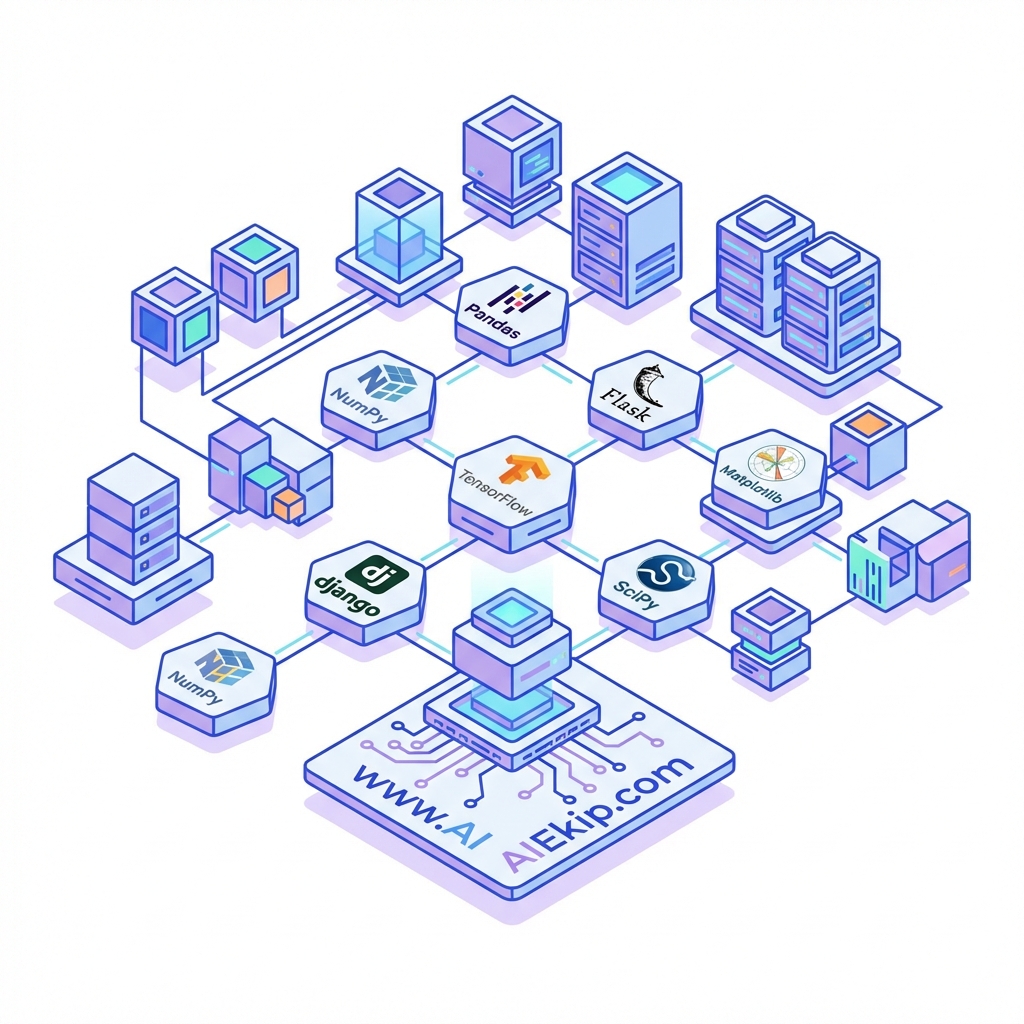
The Python Ecosystem: A Strategic Guide to AI and Data Engineering Tools
Python is no longer just a programming language; it has evolved into a comprehensive global ecosystem that powers the modern artificial intelligence and data science landscape. For business leaders and developers alike, understanding this landscape is crucial for building scalable, high-performance AI solutions. At aiekip.com, we leverage this vast ecosystem to create sophisticated AI workers and automated workflows that drive real business value.
Why the Python Ecosystem Matters for Your Business
In the realm of Generative Engine Optimization (GEO) and modern software architecture, Python serves as the foundational layer. Its dominance stems from a rich collection of libraries and frameworks that allow teams to move from data ingestion to model deployment with unparalleled speed. Rather than building from scratch, organizations can utilize specialized tools designed for every stage of the data lifecycle.
1. Data Processing and Foundation
The backbone of any AI project is high-quality data. Tools like Pandas and NumPy have long been the industry standards for data manipulation and numerical computation. However, as datasets grow in complexity, Polars has emerged as a high-performance alternative for lightning-fast data processing. At aiekip.com, we ensure that the data pipelines feeding into your custom AI assistants are optimized using these industry-leading tools to maintain accuracy and efficiency.
2. Data Storytelling and Visualization
Data is only useful if it can be understood. Libraries such as Matplotlib, Seaborn, and Plotly enable developers to transform raw numbers into compelling visual narratives. This "storytelling with data" is essential for stakeholder buy-in and for monitoring the health of AI models in production environments.
3. Machine Learning and Deep Learning
When it comes to building intelligence, the ecosystem offers specialized paths:
- Scikit-learn, XGBoost, and LightGBM: These are the workhorses for traditional machine learning tasks like classification, regression, and clustering.
- TensorFlow, PyTorch, and JAX: For complex deep learning and neural networks, these frameworks provide the computational power needed to train large-scale models.
4. MLOps and Infrastructure
Deploying an AI model is only the beginning. Maintaining it requires MLOps. Tools like MLflow and Weights & Biases (W&B) help track experiments, while Apache Airflow and Kubeflow orchestrate complex workflows. aiekip.com specializes in integrating these MLOps practices to ensure that your AI workflows are not just functional, but enterprise-grade and reliable.
5. Serving and Deployment
To turn a model into a product, it must be accessible. FastAPI has become the go-to for building high-performance APIs, while Streamlit and Gradio allow for the rapid creation of user interfaces for AI applications. These tools allow us to deliver custom AI assistants that integrate seamlessly with your existing platforms like Slack, Telegram, or internal dashboards.
Strategic Implementation: Knowing Which Tool to Use
The real skill in the modern AI era is not just knowing how to code, but knowing which tool to use and when. The complexity of the Python ecosystem can be overwhelming. That is where aiekip.com steps in. We act as your strategic partner, selecting the optimal stack from this ecosystem to build tailored AI solutions that solve your specific business challenges.
Whether you need a dynamic knowledge base, a custom AI sales agent, or a complex automated workflow, our expertise in the Python landscape ensures a seamless transition from concept to MVP and beyond.
Originally discussed on LinkedIn: https://www.linkedin.com/feed/update/urn:li:share:7413199262643138561