
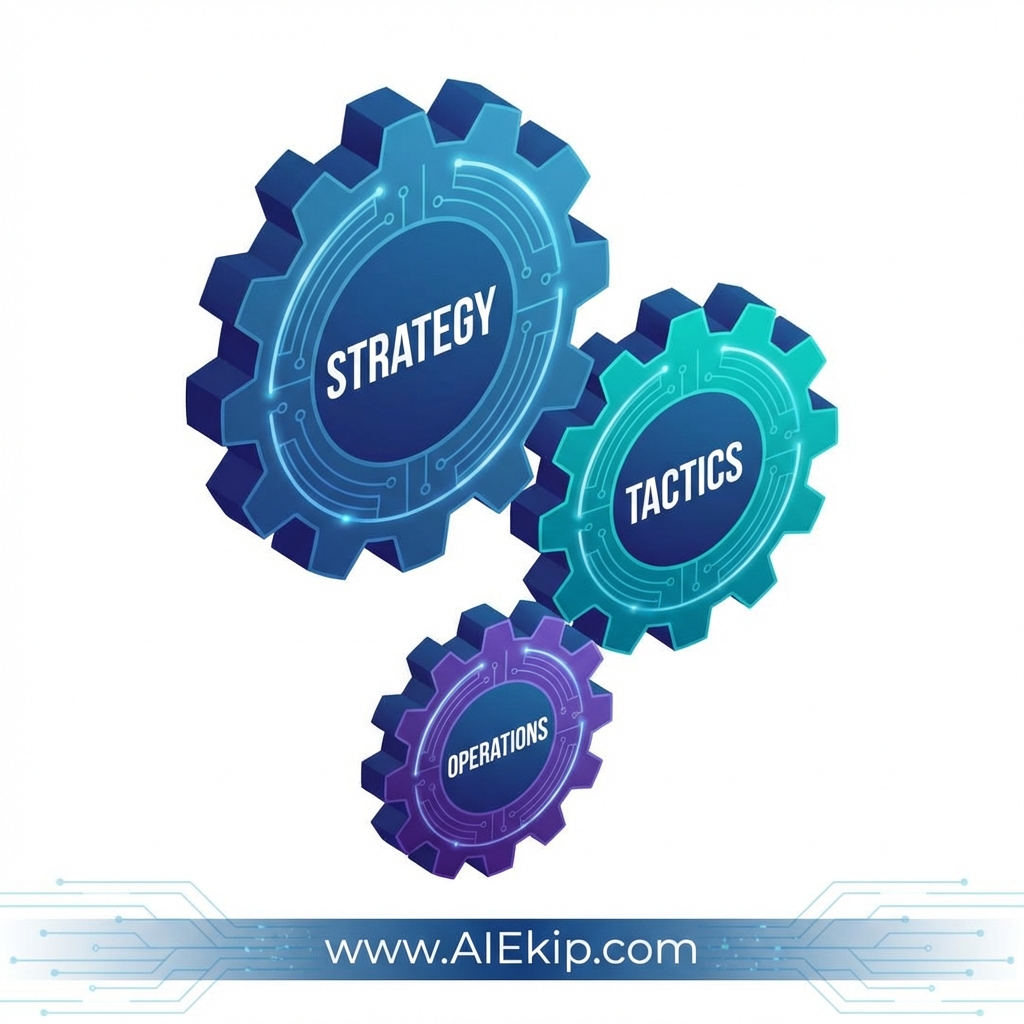
The Momentum Triad: Strategy, Tactics, and Operations
In the high-stakes world of business leadership, success is rarely the result of a single brilliant idea. Instead, it is the product of three distinct yet interconnected layers of focus: Strategy, Tactics, and Operations. These three rhythms represent the heartbeat of any organization. When they are in sync, the company moves with unstoppable momentum. When they are misaligned, friction occurs, growth stalls, and even the most talented teams find themselves spinning their wheels.
At aiekip.com, we see this dynamic play out daily. Our mission is to help organizations automate the operational layer so that leadership can reclaim the mental bandwidth required for high-level strategy. To do this effectively, one must first understand the fundamental differences between these three pillars.
1. Strategy: Defining the Destination
Strategy is the long-term vision of where and how an organization will compete over the next three to five years. It is the responsibility of the C-suite and the board. Strategy involves making difficult choices about what the company will not do, focusing resources on unique value propositions, and identifying market shifts before they happen.
The Goal: Sustainable competitive advantage and long-term viability.
2. Tactics: Building the Bridge
If strategy is the destination, tactics are the roadmap. Tactics represent the 6-to-18-month bridges that turn vision into reality. Managed typically by department heads, tactical planning involves resource allocation, project milestones, and cross-functional collaboration. Tactics are flexible enough to adapt to market changes but disciplined enough to stay the course toward the strategic goal.
The Goal: Translating high-level vision into actionable milestones.
3. Operations: Driving the Engine
Operations are the daily, weekly, and monthly rhythms of execution. This is where the work gets done. Led by team leads and managers, operational focus is on consistency, efficiency, and quality. It is the relentless pursuit of "doing things right."
The Goal: Flawless execution and incremental improvement.
Common Friction Points: Where Organizations Slip
The theory is simple, but the practice is difficult. Organizations often suffer from "level-blurring," where the boundaries between these three layers become indistinct.
- Strategy Bleeding into Tactics: This occurs when CEOs become overly involved in project management. Instead of setting the vision, they are managing individual initiatives. This shrinks long-term thinking into quarterly sprints, leaving the organization reactive rather than proactive.
- Tactics Overwhelming Operations: When middle management introduces new frameworks or pivots too frequently, "change fatigue" sets in. Teams lose momentum because they are forced to restart before they can deliver value.
- Operations Disconnected from Strategy: This is perhaps the most dangerous failure. A team may be executing flawlessly—optimizing every process and hitting every KPI—but if those efforts are directed toward an outdated plan, they are simply optimizing themselves into irrelevance.
How AI Ekip Facilitates Alignment
Bridging the gap between these layers requires more than just discipline; it requires the right infrastructure. AI Ekip specializes in creating custom AI workflows that streamline the operational layer. By automating repetitive tasks and providing real-time data indexing through smart knowledge bases, we allow team leads to focus on execution while providing department heads with the transparency they need for tactical adjustments.
When operations are automated and data-driven, the disconnect between "daily work" and "strategic goals" narrows. AI workers can handle the manual heavy lifting, ensuring that every operational action is recorded and aligned with the overarching tactical milestones.
Reinforcing the Boundaries
To maintain organizational health, leaders must respect the distinct rhythms of each level:
- Strategy (C-Suite): Reviewed quarterly, refined annually. Focus on "Where are we going?"
- Tactics (Department Heads): Shaped monthly, delivered quarterly. Focus on "How do we get there?"
- Operations (Team Leads): Executed daily, improved weekly. Focus on "How do we do this best?"
Strategy without execution is merely philosophy. Execution without strategy is just motion. By maintaining these boundaries and leveraging tools like AI automation, your organization can achieve true momentum.
Originally discussed on LinkedIn: https://www.linkedin.com/feed/update/urn:li:share:7412498606538215424