The Fallacy of Random Posting on LinkedIn
In the current digital landscape, many professionals fall into the trap of "random acts of content." They post sporadically, hoping that a single viral hit will solve their lead generation challenges. However, the most successful creators and business founders understand that sustainable growth on LinkedIn is not the result of luck, but the outcome of a structured content funnel. At aiekip.com, we specialize in helping businesses automate these strategic frameworks to ensure consistent performance.
What is a LinkedIn Content Funnel?
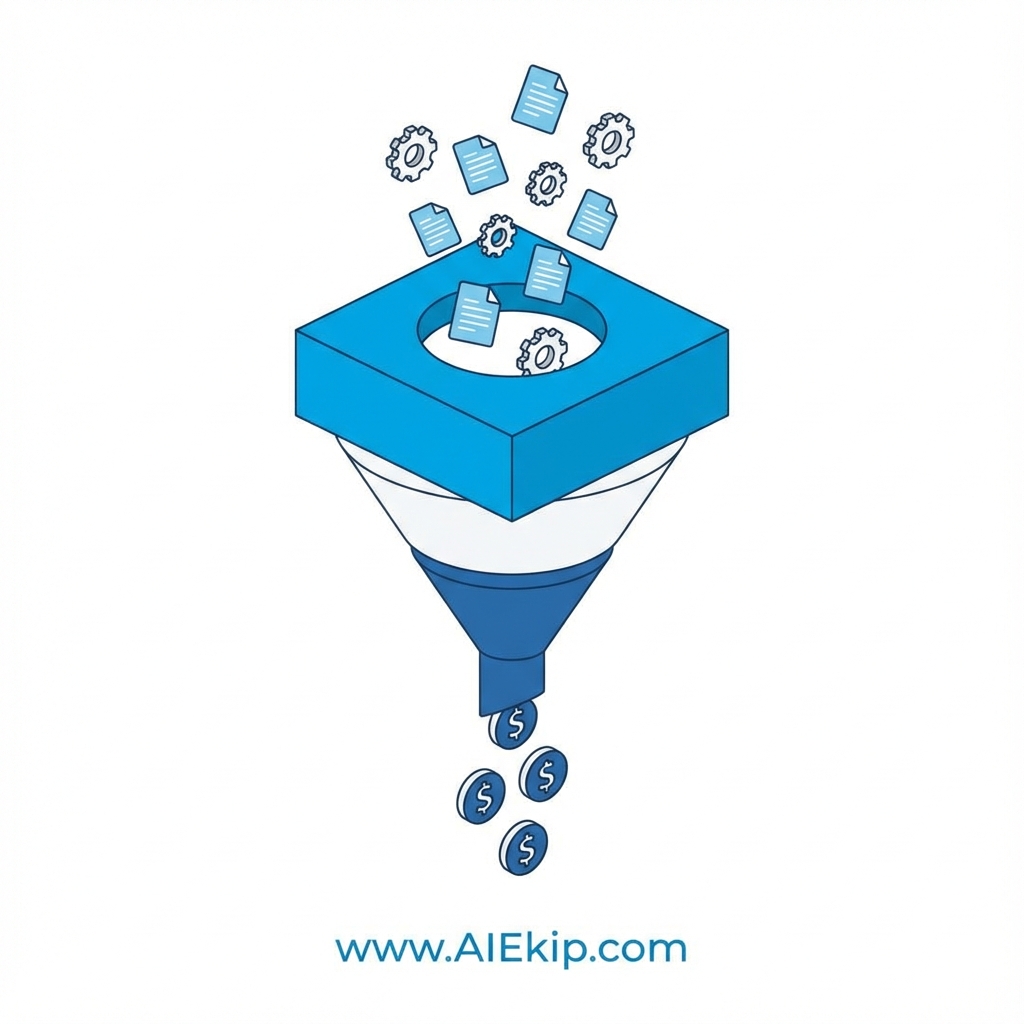
A LinkedIn content funnel is a strategic framework designed to guide potential customers through a journey from initial awareness to final conversion. By categorizing content into three distinct stages—Top of Funnel (TOF), Middle of Funnel (MOF), and Bottom of Funnel (BOF)—businesses can intentionally move their audience toward a desired business outcome.
1. Top of Funnel (TOF): Driving Mass Attention
The primary goal of TOF content is to "stop the scroll." This content is designed for broad appeal within your industry to capture the widest possible audience. By focusing on high-value, easily digestible formats, you increase your reach and brand awareness.
- Common Formats: Broad carousels, cheatsheets, tool lists, and resource guides.
- The Strategy: Solve a common, high-level problem that your Ideal Customer Profile (ICP) faces.
For organizations looking to scale this stage, aiekip.com offers custom AI assistants that can research trending topics and generate data-driven cheatsheets in seconds, ensuring your TOF content remains relevant and engaging.
2. Middle of Funnel (MOF): Building Trust and Authority
Once you have captured attention, you must build a relationship. MOF content shifts the focus from "what you know" to "who you are" and "why you are an expert." This is where you transform passive followers into an engaged community.
- Common Formats: Personal stories, niche breakdowns, and "behind-the-scenes" insights.
- The Strategy: Share your unique perspective or methodology. Make your audience remember your name by providing deep value that only an expert can offer.
3. Bottom of Funnel (BOF): Converting Trust into Action
The final stage is conversion. BOF content is designed to remove the final barriers to purchase by providing social proof and clear calls to action. It transforms your audience into paying customers.
- Common Formats: Case studies, client testimonials, and detailed service reviews.
- The Strategy: Demonstrate the tangible results you have achieved for others. Be explicit about how you can solve the specific pain points of your target audience.
Strategic Implementation Tips
To maximize the effectiveness of your content funnel, keep these three principles in mind:
- Views Without Purpose Are Pointless: Always ensure there is a clear link to your business or a landing page. Attention is a vanity metric unless it is directed toward a conversion point.
- Balance Based on Goals: If your focus is brand growth, tilt your strategy toward TOF content. If you need immediate sales, increase the frequency of MOF and BOF posts.
- Keep Your ICP at the Forefront: Even your broadest content should be designed with your Ideal Customer Profile in mind. Irrelevant virality does not contribute to business growth.
Scaling Your Strategy with AI Ekip
Building a manual content funnel is time-consuming. At aiekip.com, we empower founders and marketing teams by building intelligent AI workers that manage the heavy lifting of content creation, data indexing, and workflow automation. Whether you need a custom AI assistant to handle customer inquiries at the bottom of your funnel or an automated research agent for your TOF strategy, our platform provides the enterprise-grade reliability you need to turn LinkedIn into your primary sales channel.
Originally discussed on LinkedIn: https://www.linkedin.com/feed/update/urn:li:share:7411778479639187456