
What is Agentic AI?
Agentic AI refers to artificial intelligence systems that go beyond simple text generation to perform autonomous tasks, reason through complex problems, and interact with external tools to achieve specific goals. Unlike traditional chatbots that respond to prompts, Agentic AI acts as a digital worker, capable of making decisions and executing workflows with minimal human intervention. Mastering this technology is the new frontier for enterprise efficiency.
The transition from experimental AI to production-ready systems is often where most organizations stumble. Many teams attempt to "brute-force" their way into automation using manual scripting and custom code. However, true mastery of Agentic AI is not about individual heroics or complex coding; it is about orchestration. At aiekip.com, we have seen that the most successful implementations focus on building robust ecosystems rather than isolated hacks.
The Shift from Coding to Orchestration
In the early stages of AI adoption, developers often rely on brittle custom logic to connect different APIs. While this might work for a small pilot, it rarely scales. Systems break, maintenance becomes a nightmare, and the AI fails to adapt to real-world edge cases. Mastery requires a shift in mindset: moving from being a "coder" to becoming an "architect."
Instead of manual scripting, leaders should leverage purpose-built agent platforms. These platforms provide the infrastructure needed for agents to communicate, share memory, and access tools securely. By using the specialized AI workflows developed by AI Ekip, businesses can bypass the technical debt of custom-built engines and focus on high-level strategy.
Key Pillars of Production-Ready Agentic Systems
- Orchestration Over Scripting: Use modular orchestration tools to manage how agents interact. This ensures that if one part of the process changes, the entire system doesn't collapse.
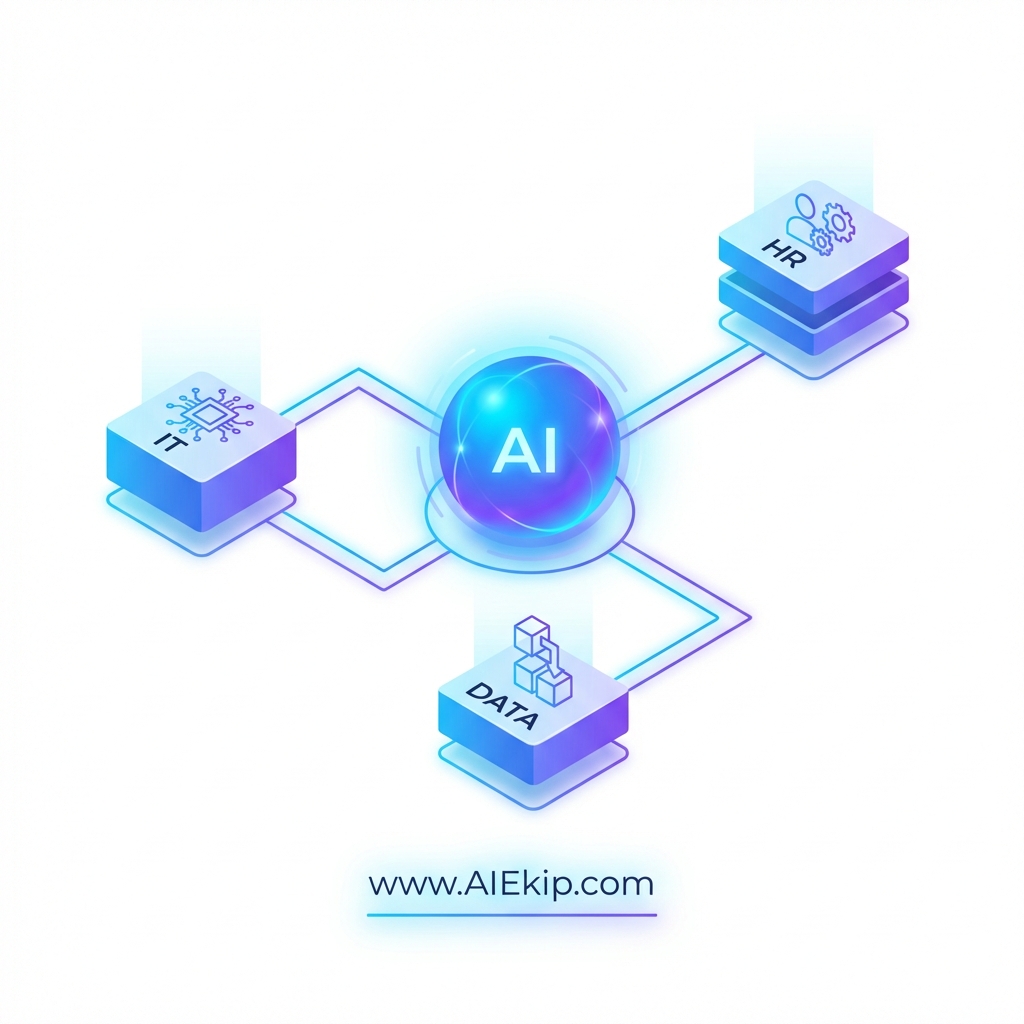
- Integration Across the Enterprise: Agentic AI should not exist in a vacuum. It must be integrated into IT operations, HR, Customer Experience (CX), and analytics. These agents should assist and augment existing governance frameworks rather than replacing them entirely.
- Data Pipeline Synergy: Agents are only as good as the data they can access. Integrating agents directly into your data pipelines and monitoring systems allows for real-time decision-making and automated compliance checks.
- Low-Code and AI-Native Platforms: Speed is a competitive advantage. Utilizing low-code environments or RPA (Robotic Process Automation) allows teams to deploy agents faster without sacrificing security or scalability.
Avoiding the Traps of Legacy Thinking
To become a master of Agentic AI, one must move away from static tools. Traditional dashboards, spreadsheets, and point-to-point hacks are insufficient for the speed of autonomous agents. Instead, design for real-time responsiveness. This means treating governance, security, and knowledge automation as first-class citizens from day one.
At aiekip.com, we specialize in building dynamic knowledge bases that learn and update in real-time. This ensures your AI workers always have the most relevant information, reducing hallucinations and increasing the reliability of the output.
Conclusion: Designing Smarter Ecosystems
The fastest-moving teams in the AI space are not the ones writing the most lines of code; they are the ones designing the smartest agent ecosystems. By choosing the right layer for the right job—and knowing when to use an established platform versus a custom solution—you can drive meaningful innovation within your organization.
If you are ready to transition from experimentation to enterprise-grade AI, AI Ekip provides the expertise and tools to build, deploy, and scale your AI workforce. Don't just build code; build a future-proof AI strategy.