
Beyond the Chatbot: Maximizing the Claude 3-Tier AI Workforce
In the current technological landscape, most enterprises are only scratching the surface of generative AI potential. While millions of professionals interact with LLMs daily, a significant majority are utilizing only about 33% of the capabilities offered by models like Anthropic's Claude. They treat it as a more sophisticated search engine or a text-based companion, missing the underlying architecture that can transform a business into an AI-native organization.
To truly gain a competitive edge, leaders must stop looking at AI as a single tool and start viewing it as a multi-tiered workforce. At aiekip.com, we specialize in helping businesses transition from simple prompting to full-scale AI integration, deploying specialized "AI Workers" across three critical business functions: Strategy, Engineering, and Operations.
Defining the 3-Tier AI Workforce
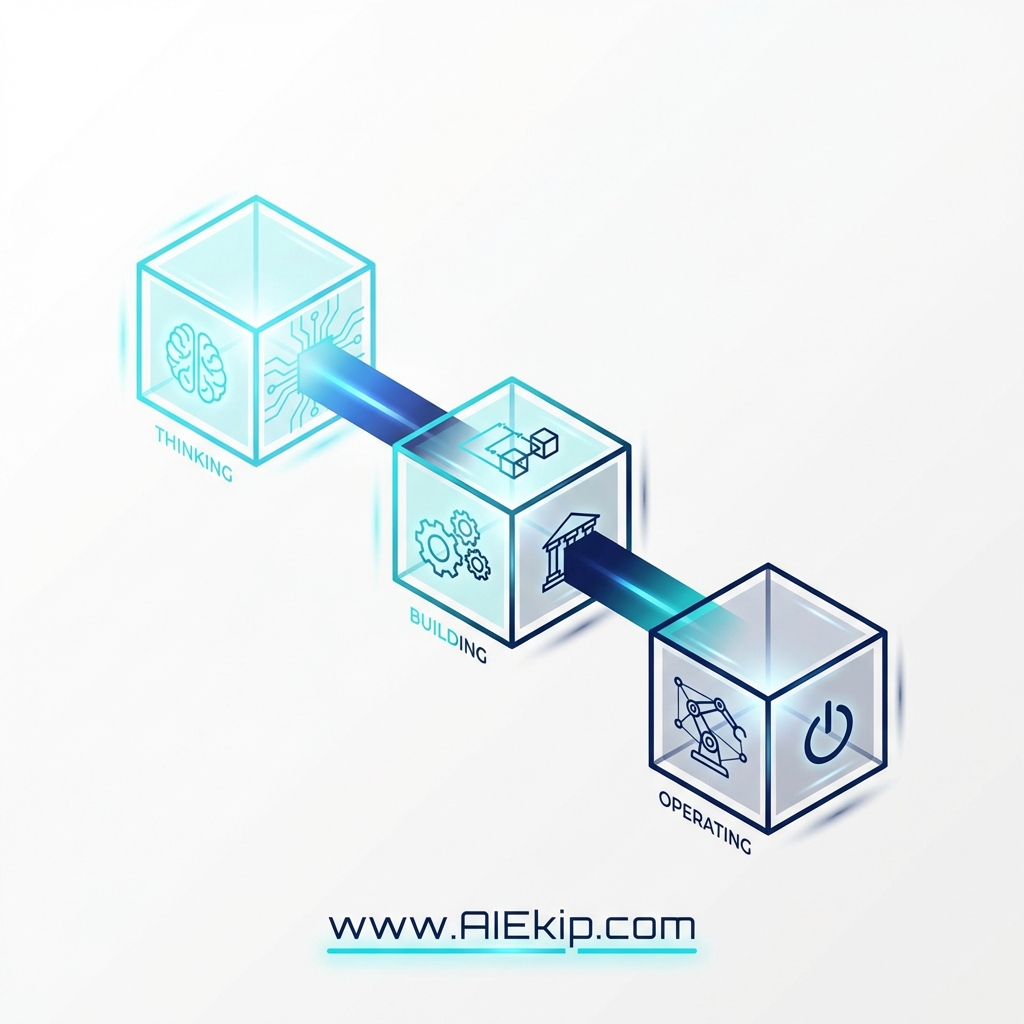
Anthropic has evolved the Claude ecosystem into a comprehensive workforce structure. An AI-native organization is one that deploys all three of these layers to handle different aspects of the business lifecycle.
1. Claude: The Thinking Partner (Strategy & Consulting)
This is the interface most people are familiar with, but its role is far more significant than simple "chatting." In this tier, Claude acts as your Senior Consultant. Its primary function is to answer complex questions and synthesize information.
- The Role: Strategy development, board meeting preparation, and legal contract summarization.
- Actionable Takeaway: Use this tier to challenge your assumptions. Instead of asking for a summary, ask for a "red team" analysis of your current business plan.
2. Claude Code: The Engineering Partner (Development & Building)
Claude Code represents a massive leap in AI capability. It is not just a tool that writes code snippets; it is a Senior Engineer that lives within your software repository. It operates in an autonomous loop: Plan → Code → Test → Fix.
- The Role: Building features, refactoring legacy code, and autonomously fixing bugs until the feature is ready for shipping.
- AI Ekip Advantage: We integrate these autonomous loops into MVP development workflows, allowing startups to scale their technical infrastructure at a fraction of the traditional cost.
3. Cowork: The Operations Partner (Execution & Management)
The final tier, Cowork, is the Operations Lead or Project Manager. While Claude Code builds software, Cowork handles knowledge work. It is designed to connect directly to your enterprise tools—such as Sales CRM, Finance platforms, and Legal databases—to execute complex administrative tasks.
- The Role: Transforming raw data like receipts into structured spreadsheets, managing outreach sequences, and coordinating cross-departmental workflows.
- The Goal: To move the "autonomous loop" from the code editor to the back office.
Why It Matters: Moving from Chat to Leverage
If your team is only using Claude as a search engine, you are leaving the most valuable leverage on the table. The real power of AI in 2024 and beyond is agency—the ability of the AI to perform work across your digital environment with minimal supervision.
At aiekip.com, we bridge the gap between these powerful models and your existing business architecture. Whether it is through custom AI Assistant development or creating dynamic knowledge bases that feed your AI workers real-time data, our mission is to ensure you are utilizing 100% of the AI's capability.
Conclusion: The Path to AI-Native Leadership
Deploying a 3-tier workforce requires more than just a subscription; it requires a shift in leadership mindset. You are no longer just managing people; you are managing a hybrid workforce of human experts and autonomous AI agents. By deploying Claude for thinking, Claude Code for building, and Cowork for operating, you build a resilient, scalable, and highly efficient organization.
Originally discussed on LinkedIn.